
- published: 29 Sep 2020
- views: 217701
Coping
Coping may refer to:
This page contains text from Wikipedia, the Free Encyclopedia - https://wn.com/Coping

Coping (joinery)
Coping or scribing is the woodworking technique of shaping the end of a moulding or frame component to neatly fit the contours of an abutting member. Joining tubular members in metalworking is also referred to as a cope, or sometimes a "fish mouth joint" or saddle joint.
Most English speaking countries outside the United States use the terms scribe and scribing.
Coping is commonly used in the fitting of skirting and other mouldings in a room. It allows for clean joints between intersecting members when walls are not square to each other. The other method of fitting these mouldings that is commonly used is the mitre joint but this technique relies upon knowing the precise angle between the walls for neat results. Coping is only ever used for internal corners. External corners are always mitred.
The main reason that scribed joints are used is that timber shrinks in width far more than it does in length. By using a scribed joint rather than an internal mitre joint the effect of shrinkage is minimised. Also it is possible to arrange the scribed joints pointing away from the most common viewpoint (usually the doorway of a room) and so present the best appearance.
This page contains text from Wikipedia, the Free Encyclopedia - https://wn.com/Coping_(joinery)

Coping (architecture)
Coping (from cope, Latin capa), consists of the capping or covering of a wall.
A splayed or wedge coping slopes in a single direction; a saddle coping slopes to either side of a central high point.
A coping may consist of stone (capstone), brick, tile, slate, metal, wood or thatch. In all cases it should be weathered to throw off the water.
Various types of copings exist. A diagramatic explanation of copper copings is available.
In Romanesque work copings appeared plain and flat, and projected over the wall with a throating to form a drip. In later work a steep slope was given to the weathering (mainly on the outer side), and began at the top with an astragal; in the Decorated style there were two or three sets off; and in the later Perpendicular Period these assumed a wavy section, and the coping mouldings continued round the sides, as well as at top and bottom, mitreing at the angles, as in many of the colleges at Oxford.
References
 This article incorporates text from a publication now in the public domain: Chisholm, Hugh, ed. (1911). Encyclopædia Britannica (11th ed.). Cambridge University Press.
This page contains text from Wikipedia, the Free Encyclopedia - https://wn.com/Coping_(architecture)
Podcasts:
-

Coping Mechanisms
Mental Health Collaborative is a nonprofit organization dedicated to educating our community in mental health literacy. This video discusses the healthy and unhealthy coping mechanisms we use to deal with life stresses. Our website: Mentalhealthcollaborative.org Follow us on social media! Instagram: @mentalhealthcollaborative Facebook: MentalHealthCollaborativeMA Twitter: @mentalhealthcol Find a therapist: Psychologytoday.com Affordable, online treatment: betterhelp.com
published: 29 Sep 2020 -
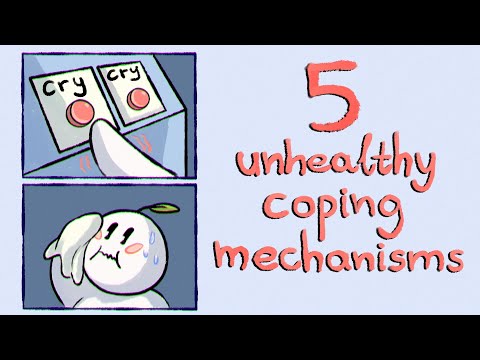
5 Unhealthy Coping Mechanisms You Shouldn’t Ignore
We all have different ways of dealing with stressful circumstances. Coping mechanisms are go-to strategies you consciously or unconsciously implement to self-soothe in the face of stress and or trauma that help your emotional well-being. The caveat is that not all coping skills are healthy. What can seem like a temporary fix or something you only do in certain situations can be unhealthy coping mechanisms. To help you improve your mental health, this video addresses unhealthy coping skills, which we are all more likely to do. If you relate to this video and want to learn how to practice self-love, we have a video on that too: https://youtu.be/ZsTKyYOuK84 Writer: Sara Del Villar Script Editor: Morgan Franz Script Manager: Kelly Soong VO: Amanda Silvera Animator: Ania K. YouTube Mana...
published: 23 Feb 2021 -

Finding your coping mechanism | Joseph Lewis | TEDxFoggyBottom
People who encounter policeman Joseph Lewis are confused by his habit of smiling whenever in danger, a coping technique he developed during his difficult childhood in Liberia and homelessness in the United States. By developing genuine gratitude for others, Joseph believes we can all react more positively to fear in any form. Joseph Lewis is a law enforcement officer for DC Metro, a community advocate for the Lutheran Immigration Refugee Service, a seminary student, and a former refugee. Born in Liberia, he lived a normal life up until 1989, when a civil war broke out in the area. After facing multiple setbacks for the remainder of his childhood and the beginning of his adult life, Joseph migrated to the United States where he settled into a life of homelessness. Encouragement from those...
published: 22 May 2018 -

How to cope with anxiety | Olivia Remes | TEDxUHasselt
Anxiety is one of most prevalent mental health disorders, with 1 out of 14 people around the world being likely affected. Leading up to conditions such as depression, increased risk for suicide, disability and requirement of high health services, very few people who often need treatment actually receive it. In her talk “How to cope with anxiety”, Olivia Remes of the University of Cambridge will share her vision on anxiety and will unravel ways to treat and manage this health disorder. Arguing that treatments such as psychotherapy and medication exist and often result in poor outcome and high rates of relapses, she will emphasise the importance of harnessing strength in ourselves as we modify our problem-coping mechanisms. Olivia will stress that by allowing ourselves to believe that what h...
published: 11 May 2017 -

Coping With Depression
Depression can happen at any time in your life and major depression can affect more than your mood. Learn the symptoms of depression, treatment options and resources for Veterans and those who love them.
published: 07 Dec 2017 -

Coping Skills for Anxiety or Depression 13/30 How to Process Emotions
Get the course: How to Process Your Emotions https://courses.therapyinanutshell.com/emotion-processing?utm_campaign=May%207,%202021&utm_medium=Description&utm_source=YouTube Coping skills can be really important for anxiety. They often soothe or comfort us, and they help us calm down and make better choices. However, coping skills do nothing to solve our problems in the long term, and some of them, if used exclusively, can be harmful. Coping skills help us take a break from our discomfort, but also from our life purpose. So that’s why I get a little bugged when I hear that the only skill someone is learning in therapy is how to cope. Using coping skills to get through a crisis and get calm and then coming back and resolving the problem is the best long-term practice. This ability to paus...
published: 07 May 2021 -

How Your Trauma Explains Your Coping Mechanisms
When you've experienced trauma, the way you interact with the world and others can be shaped by the traumatic experiences you may have. Being aware of how each of these trauma affects you can help you navigate your relationships, life, and also personal success. In this video, we cover examples like how being abandoned might make you feel more avoidant and distrustful of relationships. Another example may be being abused or exploited makes you less likely to trust others. We suggest checking out this video as well: https://youtu.be/L19rogwrnm0 Writer: Chloe Avenasa Script Editor: Vanessa Tao Script Manager: Kelly Soong Voice: Amanda Silvera (www.youtube.com/amandasilvera) Animator: Stephanie Cárdenas YouTube Manager: Cindy Cheong REFERENCES Gavin, H. (2011). Sticks and stone...
published: 21 Aug 2022 -

Rosie Darling - Coping (Official Music Video)
'Coping' Out Now: https://rosiedarling.ffm.to/coping Spotify: https://spoti.fi/2JayS1s Instagram: https://www.instagram.com/rosieldarling/ Twitter: https://twitter.com/rosieldarling Tik Tok: https://www.tiktok.com/@itsrosiedarling Facebook: https://www.facebook.com/rosiedarlingmusic/ Directed by: Claire Schmitt Lyrics: I'm not used to being with somebody with their shit together Saying sorry actually makes it better I did things to you I said I'd never I miss waiting for you in the lobby of your old apartment Drawing shapes with you into the carpet Back before the end had even started Now that you're gone It's my fault I'm so lost I'm sorry I'm sorry I'm sorry Smoking cheap pre-rolls and listening to LANY Hoping you don't hate me I know it's lame but this is how I'm coping without In...
published: 06 Nov 2020 -

The Isolation of Trading: Coping with Loneliness in the Trading World
💰 Trade smarter and unlock VIP perks for FREE! 🎁 Join us now: https://www.simply-forex.com/axitrading 🚀 🔗 For personalised coaching, reach out to hellosimplyforex@gmail.com 🆓 FREE: https://discord.gg/cYTEstcxpu 🔒 VIP: https://mee6.xyz/en/m/970957587384246312 📰 10% OFF Investing.com, USE CODE - SIMPLY: https://ca.investing.com/pro/pricing?utm_source=influencers&utm_medium=youtube&utm_campaign=simplyforex 🚨 Disclaimer: I'm not a financial advisor. Trading carries risks, so conduct thorough research and trade responsibly. Your investment decisions are yours alone. Trade wisely! 💼📊 #forex #live #trading #finance #investing
published: 01 Apr 2024 -

25 Amazing COPING SKILLS Everyone Needs
I'm Kati Morton, a licensed therapist making Mental Health videos! #katimorton #therapist #therapy MY BOOKS (in stores now) Traumatized https://geni.us/Bfak0j Are u ok? http://bit.ly/2s0mULy ONLINE THERAPY While I do not currently offer online therapy, BetterHelp can connect you with a licensed, online therapist, please visit: https://betterhelp.com/kati Join this channel to get access to perks: https://www.youtube.com/channel/UCzBYOHyEEzlkRdDOSobbpvw/join PATREON https://www.katimorton.com/kati-morton-patreon/ YOU CAN SUPPORT THE CHANNEL BY SHOPPING WITH OUR AFFILIATE LINKS Instacart: https://www.instacart.oloiyb.net/y2j2GB Amazon: https://www.amazon.com/shop/katimorton PARTNERSHIP Linnea Toney linnea@underscoretalent.com PLEASE READ If you or someone you know is in immed...
published: 26 Jul 2018
developed with YouTube
6:02
Coping Mechanisms
- Order: Reorder
- Duration: 6:02
- Uploaded Date: 29 Sep 2020
- views: 217701
Mental Health Collaborative is a nonprofit organization dedicated to educating our community in mental health literacy. This video discusses the healthy and unh...
Mental Health Collaborative is a nonprofit organization dedicated to educating our community in mental health literacy. This video discusses the healthy and unhealthy coping mechanisms we use to deal with life stresses.
Our website:
Mentalhealthcollaborative.org
Follow us on social media!
Instagram: @mentalhealthcollaborative
Facebook: MentalHealthCollaborativeMA
Twitter: @mentalhealthcol
Find a therapist:
Psychologytoday.com
Affordable, online treatment:
betterhelp.com
https://wn.com/Coping_Mechanisms
Mental Health Collaborative is a nonprofit organization dedicated to educating our community in mental health literacy. This video discusses the healthy and unhealthy coping mechanisms we use to deal with life stresses.
Our website:
Mentalhealthcollaborative.org
Follow us on social media!
Instagram: @mentalhealthcollaborative
Facebook: MentalHealthCollaborativeMA
Twitter: @mentalhealthcol
Find a therapist:
Psychologytoday.com
Affordable, online treatment:
betterhelp.com
6:28
5 Unhealthy Coping Mechanisms You Shouldn’t Ignore
- Order: Reorder
- Duration: 6:28
- Uploaded Date: 23 Feb 2021
- views: 971548
We all have different ways of dealing with stressful circumstances. Coping mechanisms are go-to strategies you consciously or unconsciously implement to self-so...
We all have different ways of dealing with stressful circumstances. Coping mechanisms are go-to strategies you consciously or unconsciously implement to self-soothe in the face of stress and or trauma that help your emotional well-being. The caveat is that not all coping skills are healthy. What can seem like a temporary fix or something you only do in certain situations can be unhealthy coping mechanisms. To help you improve your mental health, this video addresses unhealthy coping skills, which we are all more likely to do.
If you relate to this video and want to learn how to practice self-love, we have a video on that too: https://youtu.be/ZsTKyYOuK84
Writer: Sara Del Villar
Script Editor: Morgan Franz
Script Manager: Kelly Soong
VO: Amanda Silvera
Animator: Ania K.
YouTube Manager: Cindy Cheong
Reference:
http://bit.ly/3kcCbUp
Join this channel to get access to perks:
https://www.youtube.com/channel/UCkJEpR7JmS36tajD34Gp4VA/join
Would you like to animate for the team? Check out this: https://psych2go.net/interested-in-animating-for-pych2go-faq/
Interested in writing for psych2go? Check out:
https://psych2go.net/script-writing-position-faqs/
#unhealthy #copingskills #psych2go
https://wn.com/5_Unhealthy_Coping_Mechanisms_You_Shouldn’T_Ignore
We all have different ways of dealing with stressful circumstances. Coping mechanisms are go-to strategies you consciously or unconsciously implement to self-soothe in the face of stress and or trauma that help your emotional well-being. The caveat is that not all coping skills are healthy. What can seem like a temporary fix or something you only do in certain situations can be unhealthy coping mechanisms. To help you improve your mental health, this video addresses unhealthy coping skills, which we are all more likely to do.
If you relate to this video and want to learn how to practice self-love, we have a video on that too: https://youtu.be/ZsTKyYOuK84
Writer: Sara Del Villar
Script Editor: Morgan Franz
Script Manager: Kelly Soong
VO: Amanda Silvera
Animator: Ania K.
YouTube Manager: Cindy Cheong
Reference:
http://bit.ly/3kcCbUp
Join this channel to get access to perks:
https://www.youtube.com/channel/UCkJEpR7JmS36tajD34Gp4VA/join
Would you like to animate for the team? Check out this: https://psych2go.net/interested-in-animating-for-pych2go-faq/
Interested in writing for psych2go? Check out:
https://psych2go.net/script-writing-position-faqs/
#unhealthy #copingskills #psych2go
- published: 23 Feb 2021
- views: 971548
9:45
Finding your coping mechanism | Joseph Lewis | TEDxFoggyBottom
- Order: Reorder
- Duration: 9:45
- Uploaded Date: 22 May 2018
- views: 69384
People who encounter policeman Joseph Lewis are confused by his habit of smiling whenever in danger, a coping technique he developed during his difficult childh...
People who encounter policeman Joseph Lewis are confused by his habit of smiling whenever in danger, a coping technique he developed during his difficult childhood in Liberia and homelessness in the United States. By developing genuine gratitude for others, Joseph believes we can all react more positively to fear in any form.
Joseph Lewis is a law enforcement officer for DC Metro, a community advocate for the Lutheran Immigration Refugee Service, a seminary student, and a former refugee. Born in Liberia, he lived a normal life up until 1989, when a civil war broke out in the area. After facing multiple setbacks for the remainder of his childhood and the beginning of his adult life, Joseph migrated to the United States where he settled into a life of homelessness. Encouragement from those in his local community inspired Joseph to go to college and earn a degree. Through his experiences, Joseph has become a key community figure and source of inspiration, actively telling his story and encouraging others to do the same.
This talk was given at a TEDx event using the TED conference format but independently organized by a local community. Learn more at https://www.ted.com/tedx
https://wn.com/Finding_Your_Coping_Mechanism_|_Joseph_Lewis_|_Tedxfoggybottom
People who encounter policeman Joseph Lewis are confused by his habit of smiling whenever in danger, a coping technique he developed during his difficult childhood in Liberia and homelessness in the United States. By developing genuine gratitude for others, Joseph believes we can all react more positively to fear in any form.
Joseph Lewis is a law enforcement officer for DC Metro, a community advocate for the Lutheran Immigration Refugee Service, a seminary student, and a former refugee. Born in Liberia, he lived a normal life up until 1989, when a civil war broke out in the area. After facing multiple setbacks for the remainder of his childhood and the beginning of his adult life, Joseph migrated to the United States where he settled into a life of homelessness. Encouragement from those in his local community inspired Joseph to go to college and earn a degree. Through his experiences, Joseph has become a key community figure and source of inspiration, actively telling his story and encouraging others to do the same.
This talk was given at a TEDx event using the TED conference format but independently organized by a local community. Learn more at https://www.ted.com/tedx
- published: 22 May 2018
- views: 69384
15:16
How to cope with anxiety | Olivia Remes | TEDxUHasselt
- Order: Reorder
- Duration: 15:16
- Uploaded Date: 11 May 2017
- views: 5255060
Anxiety is one of most prevalent mental health disorders, with 1 out of 14 people around the world being likely affected. Leading up to conditions such as depre...
Anxiety is one of most prevalent mental health disorders, with 1 out of 14 people around the world being likely affected. Leading up to conditions such as depression, increased risk for suicide, disability and requirement of high health services, very few people who often need treatment actually receive it. In her talk “How to cope with anxiety”, Olivia Remes of the University of Cambridge will share her vision on anxiety and will unravel ways to treat and manage this health disorder. Arguing that treatments such as psychotherapy and medication exist and often result in poor outcome and high rates of relapses, she will emphasise the importance of harnessing strength in ourselves as we modify our problem-coping mechanisms. Olivia will stress that by allowing ourselves to believe that what happens in life is comprehensive, meaningful, and manageable, one can significantly improve their risk of developing anxiety disorders.
Anxiety is one of most prevalent mental health disorders, with 1 out of 14 people around the world being likely affected. Leading up to conditions such as depression, increased risk for suicide, disability and requirement of high health services, very few people who often need treatment actually receive it. In her talk “How to cope with anxiety”, Olivia Remes of the University of Cambridge will share her vision on anxiety and will unravel ways to treat and manage this health disorder. Arguing that treatments such as psychotherapy and medication exist and often result in poor outcome and high rates of relapses, she will emphasise the importance of harnessing strength in ourselves as we modify our problem-coping mechanisms. At TEDxUHasselt 2017, Olivia will stress that by allowing ourselves to believe that what happens in life is comprehensive, meaningful, and manageable, one can significantly improve their risk of developing anxiety disorders.
This talk was given at a TEDx event using the TED conference format but independently organized by a local community. Learn more at http://ted.com/tedx
https://wn.com/How_To_Cope_With_Anxiety_|_Olivia_Remes_|_Tedxuhasselt
Anxiety is one of most prevalent mental health disorders, with 1 out of 14 people around the world being likely affected. Leading up to conditions such as depression, increased risk for suicide, disability and requirement of high health services, very few people who often need treatment actually receive it. In her talk “How to cope with anxiety”, Olivia Remes of the University of Cambridge will share her vision on anxiety and will unravel ways to treat and manage this health disorder. Arguing that treatments such as psychotherapy and medication exist and often result in poor outcome and high rates of relapses, she will emphasise the importance of harnessing strength in ourselves as we modify our problem-coping mechanisms. Olivia will stress that by allowing ourselves to believe that what happens in life is comprehensive, meaningful, and manageable, one can significantly improve their risk of developing anxiety disorders.
Anxiety is one of most prevalent mental health disorders, with 1 out of 14 people around the world being likely affected. Leading up to conditions such as depression, increased risk for suicide, disability and requirement of high health services, very few people who often need treatment actually receive it. In her talk “How to cope with anxiety”, Olivia Remes of the University of Cambridge will share her vision on anxiety and will unravel ways to treat and manage this health disorder. Arguing that treatments such as psychotherapy and medication exist and often result in poor outcome and high rates of relapses, she will emphasise the importance of harnessing strength in ourselves as we modify our problem-coping mechanisms. At TEDxUHasselt 2017, Olivia will stress that by allowing ourselves to believe that what happens in life is comprehensive, meaningful, and manageable, one can significantly improve their risk of developing anxiety disorders.
This talk was given at a TEDx event using the TED conference format but independently organized by a local community. Learn more at http://ted.com/tedx
- published: 11 May 2017
- views: 5255060
4:49
Coping With Depression
- Order: Reorder
- Duration: 4:49
- Uploaded Date: 07 Dec 2017
- views: 427648
Depression can happen at any time in your life and major depression can affect more than your mood. Learn the symptoms of depression, treatment options and reso...
Depression can happen at any time in your life and major depression can affect more than your mood. Learn the symptoms of depression, treatment options and resources for Veterans and those who love them.
https://wn.com/Coping_With_Depression
Depression can happen at any time in your life and major depression can affect more than your mood. Learn the symptoms of depression, treatment options and resources for Veterans and those who love them.
- published: 07 Dec 2017
- views: 427648
11:13
Coping Skills for Anxiety or Depression 13/30 How to Process Emotions
- Order: Reorder
- Duration: 11:13
- Uploaded Date: 07 May 2021
- views: 295608
Get the course: How to Process Your Emotions
https://courses.therapyinanutshell.com/emotion-processing?utm_campaign=May%207,%202021&utm_medium=Description&utm_s...
Get the course: How to Process Your Emotions
https://courses.therapyinanutshell.com/emotion-processing?utm_campaign=May%207,%202021&utm_medium=Description&utm_source=YouTube
Coping skills can be really important for anxiety. They often soothe or comfort us, and they help us calm down and make better choices. However, coping skills do nothing to solve our problems in the long term, and some of them, if used exclusively, can be harmful. Coping skills help us take a break from our discomfort, but also from our life purpose. So that’s why I get a little bugged when I hear that the only skill someone is learning in therapy is how to cope.
Using coping skills to get through a crisis and get calm and then coming back and resolving the problem is the best long-term practice. This ability to pause before choosing an action is an essential skill of emotionally resilient people.
Looking for affordable online therapy? My sponsor, BetterHelp, connects you to a licensed professional from the comfort of your own home. Try it now for 10% off: https://betterhelp.com/therapyinanutshell
Learn more in one of my in-depth mental health courses: https://courses.therapyinanutshell.com/?utm_campaign=05072021&utm_medium=Description&utm_source=YouTube
Support my mission on Patreon: https://www.patreon.com/therapyinanutshell
Sign up for my newsletter: https://courses.therapyinanutshell.com/free-resources
Check out my favorite self-help books: https://kit.co/TherapyinaNutshell/best-self-help-books
Check out my podcast, Therapy in a Nutshell: https://tinpodcast.podbean.com/
Therapy in a Nutshell, LLC, and the information provided by Emma McAdam are solely intended for informational and entertainment purposes and are not a substitute for advice, diagnosis, or treatment regarding medical or mental health conditions. Although Emma McAdam is a licensed marriage and family therapist, the views expressed on this site or any related content should not be taken for medical or psychiatric advice. Always consult your physician before making any decisions related to your physical or mental health.
In therapy I use a combination of Acceptance and Commitment Therapy, Systems Theory, positive psychology, and a bio-psycho-social approach to treating mental illness and other challenges we all face in life. The ideas from my videos are frequently adapted from multiple sources. Many of them come from Acceptance and Commitment Therapy, especially the work of Steven Hayes, Jason Luoma, and Russ Harris. The sections on stress and the mind-body connection derive from the work of Stephen Porges (the Polyvagal theory), Peter Levine (Somatic Experiencing) Francine Shapiro (EMDR), and Bessel Van Der Kolk. I also rely heavily on the work of the Arbinger institute for my overall understanding of our ability to choose our life's direction.
And deeper than all of that, the Gospel of Jesus Christ orients my personal worldview and sense of security, peace, hope, and love https://www.churchofjesuschrist.org/comeuntochrist/believe
If you are in crisis, please contact the National Suicide Prevention Hotline at https://suicidepreventionlifeline.org/ or 1-800-273-TALK (8255) or your local emergency services.
Copyright Therapy in a Nutshell, LLC
----
Music licensed from www.Bensound.com or Artlist.io
Images from Freepik.com (premium license), Pixabay, or Wikimedia commons
https://wn.com/Coping_Skills_For_Anxiety_Or_Depression_13_30_How_To_Process_Emotions
Get the course: How to Process Your Emotions
https://courses.therapyinanutshell.com/emotion-processing?utm_campaign=May%207,%202021&utm_medium=Description&utm_source=YouTube
Coping skills can be really important for anxiety. They often soothe or comfort us, and they help us calm down and make better choices. However, coping skills do nothing to solve our problems in the long term, and some of them, if used exclusively, can be harmful. Coping skills help us take a break from our discomfort, but also from our life purpose. So that’s why I get a little bugged when I hear that the only skill someone is learning in therapy is how to cope.
Using coping skills to get through a crisis and get calm and then coming back and resolving the problem is the best long-term practice. This ability to pause before choosing an action is an essential skill of emotionally resilient people.
Looking for affordable online therapy? My sponsor, BetterHelp, connects you to a licensed professional from the comfort of your own home. Try it now for 10% off: https://betterhelp.com/therapyinanutshell
Learn more in one of my in-depth mental health courses: https://courses.therapyinanutshell.com/?utm_campaign=05072021&utm_medium=Description&utm_source=YouTube
Support my mission on Patreon: https://www.patreon.com/therapyinanutshell
Sign up for my newsletter: https://courses.therapyinanutshell.com/free-resources
Check out my favorite self-help books: https://kit.co/TherapyinaNutshell/best-self-help-books
Check out my podcast, Therapy in a Nutshell: https://tinpodcast.podbean.com/
Therapy in a Nutshell, LLC, and the information provided by Emma McAdam are solely intended for informational and entertainment purposes and are not a substitute for advice, diagnosis, or treatment regarding medical or mental health conditions. Although Emma McAdam is a licensed marriage and family therapist, the views expressed on this site or any related content should not be taken for medical or psychiatric advice. Always consult your physician before making any decisions related to your physical or mental health.
In therapy I use a combination of Acceptance and Commitment Therapy, Systems Theory, positive psychology, and a bio-psycho-social approach to treating mental illness and other challenges we all face in life. The ideas from my videos are frequently adapted from multiple sources. Many of them come from Acceptance and Commitment Therapy, especially the work of Steven Hayes, Jason Luoma, and Russ Harris. The sections on stress and the mind-body connection derive from the work of Stephen Porges (the Polyvagal theory), Peter Levine (Somatic Experiencing) Francine Shapiro (EMDR), and Bessel Van Der Kolk. I also rely heavily on the work of the Arbinger institute for my overall understanding of our ability to choose our life's direction.
And deeper than all of that, the Gospel of Jesus Christ orients my personal worldview and sense of security, peace, hope, and love https://www.churchofjesuschrist.org/comeuntochrist/believe
If you are in crisis, please contact the National Suicide Prevention Hotline at https://suicidepreventionlifeline.org/ or 1-800-273-TALK (8255) or your local emergency services.
Copyright Therapy in a Nutshell, LLC
----
Music licensed from www.Bensound.com or Artlist.io
Images from Freepik.com (premium license), Pixabay, or Wikimedia commons
- published: 07 May 2021
- views: 295608
5:28
How Your Trauma Explains Your Coping Mechanisms
- Order: Reorder
- Duration: 5:28
- Uploaded Date: 21 Aug 2022
- views: 1971089
When you've experienced trauma, the way you interact with the world and others can be shaped by the traumatic experiences you may have. Being aware of how each ...
When you've experienced trauma, the way you interact with the world and others can be shaped by the traumatic experiences you may have. Being aware of how each of these trauma affects you can help you navigate your relationships, life, and also personal success. In this video, we cover examples like how being abandoned might make you feel more avoidant and distrustful of relationships. Another example may be being abused or exploited makes you less likely to trust others.
We suggest checking out this video as well: https://youtu.be/L19rogwrnm0
Writer: Chloe Avenasa
Script Editor: Vanessa Tao
Script Manager: Kelly Soong
Voice: Amanda Silvera (www.youtube.com/amandasilvera)
Animator: Stephanie Cárdenas
YouTube Manager: Cindy Cheong
REFERENCES
Gavin, H. (2011). Sticks and stones may break my bones: The effects of emotional abuse. Journal of Aggression, Maltreatment & Trauma, 20(5), 503-529.
Claesson, K., & Sohlberg, S. (2002). Internalized shame and early interactions characterized by indifference, abandonment and rejection: Replicated findings. Clinical Psychology & Psychotherapy: An International Journal of Theory & Practice, 9(4), 277-284.
Tuval-Mashiach, R., Freedman, S., Bargai, N., Boker, R., Hadar, H., & Shalev, A. Y. (2004). Coping with trauma: Narrative and cognitive perspectives. Psychiatry: Interpersonal and Biological Processes, 67(3), 280-293.
Friedberg, A., & Malefakis, D. (2018). Resilience, trauma, and coping. Psychodynamic psychiatry, 46(1), 81-113.
https://wn.com/How_Your_Trauma_Explains_Your_Coping_Mechanisms
When you've experienced trauma, the way you interact with the world and others can be shaped by the traumatic experiences you may have. Being aware of how each of these trauma affects you can help you navigate your relationships, life, and also personal success. In this video, we cover examples like how being abandoned might make you feel more avoidant and distrustful of relationships. Another example may be being abused or exploited makes you less likely to trust others.
We suggest checking out this video as well: https://youtu.be/L19rogwrnm0
Writer: Chloe Avenasa
Script Editor: Vanessa Tao
Script Manager: Kelly Soong
Voice: Amanda Silvera (www.youtube.com/amandasilvera)
Animator: Stephanie Cárdenas
YouTube Manager: Cindy Cheong
REFERENCES
Gavin, H. (2011). Sticks and stones may break my bones: The effects of emotional abuse. Journal of Aggression, Maltreatment & Trauma, 20(5), 503-529.
Claesson, K., & Sohlberg, S. (2002). Internalized shame and early interactions characterized by indifference, abandonment and rejection: Replicated findings. Clinical Psychology & Psychotherapy: An International Journal of Theory & Practice, 9(4), 277-284.
Tuval-Mashiach, R., Freedman, S., Bargai, N., Boker, R., Hadar, H., & Shalev, A. Y. (2004). Coping with trauma: Narrative and cognitive perspectives. Psychiatry: Interpersonal and Biological Processes, 67(3), 280-293.
Friedberg, A., & Malefakis, D. (2018). Resilience, trauma, and coping. Psychodynamic psychiatry, 46(1), 81-113.
- published: 21 Aug 2022
- views: 1971089
3:11
Rosie Darling - Coping (Official Music Video)
- Order: Reorder
- Duration: 3:11
- Uploaded Date: 06 Nov 2020
- views: 910052
'Coping' Out Now: https://rosiedarling.ffm.to/coping
Spotify: https://spoti.fi/2JayS1s
Instagram: https://www.instagram.com/rosieldarling/
Twitter: https://twi...
'Coping' Out Now: https://rosiedarling.ffm.to/coping
Spotify: https://spoti.fi/2JayS1s
Instagram: https://www.instagram.com/rosieldarling/
Twitter: https://twitter.com/rosieldarling
Tik Tok: https://www.tiktok.com/@itsrosiedarling
Facebook: https://www.facebook.com/rosiedarlingmusic/
Directed by: Claire Schmitt
Lyrics:
I'm not used to being with somebody with their shit together
Saying sorry actually makes it better
I did things to you I said I'd never
I miss waiting for you in the lobby of your old apartment
Drawing shapes with you into the carpet
Back before the end had even started
Now that you're gone
It's my fault
I'm so lost
I'm sorry I'm sorry I'm sorry
Smoking cheap pre-rolls and listening to LANY
Hoping you don't hate me
I know it's lame but this is how I'm coping without
Inside jokes and places that you'd take me
Bet you probably blame me
I know it's lame but this is how im coping
Without you
I'm the best at getting disappointed by my expectations
Try to read my mind it's always racing
Damn, I really love to test your patience
Now that you're gone
It's my fault
I'm so lost
I'm sorry I'm sorry I'm sorry
Smoking cheap pre-rolls and listening to LANY
Hoping you don't hate me
I know it's lame but this is how I'm coping without
Inside jokes and places that you'd take me
Bet you probably blame me
I know it's lame but this is how im coping
Without you
Without you
Without you
Without you
I'm the best at getting disappointed by my expectations
Try to read my mind it's always racing
Damn, I really love to test your patience
Smoking cheap pre-rolls and listening to LANY
Hoping you don't hate me
I know it's lame but this is how I'm coping without
Inside jokes and places that you'd take me
Bet you probably blame me
I know it's lame but this is how i'm coping
Without you
Without you
https://wn.com/Rosie_Darling_Coping_(Official_Music_Video)
'Coping' Out Now: https://rosiedarling.ffm.to/coping
Spotify: https://spoti.fi/2JayS1s
Instagram: https://www.instagram.com/rosieldarling/
Twitter: https://twitter.com/rosieldarling
Tik Tok: https://www.tiktok.com/@itsrosiedarling
Facebook: https://www.facebook.com/rosiedarlingmusic/
Directed by: Claire Schmitt
Lyrics:
I'm not used to being with somebody with their shit together
Saying sorry actually makes it better
I did things to you I said I'd never
I miss waiting for you in the lobby of your old apartment
Drawing shapes with you into the carpet
Back before the end had even started
Now that you're gone
It's my fault
I'm so lost
I'm sorry I'm sorry I'm sorry
Smoking cheap pre-rolls and listening to LANY
Hoping you don't hate me
I know it's lame but this is how I'm coping without
Inside jokes and places that you'd take me
Bet you probably blame me
I know it's lame but this is how im coping
Without you
I'm the best at getting disappointed by my expectations
Try to read my mind it's always racing
Damn, I really love to test your patience
Now that you're gone
It's my fault
I'm so lost
I'm sorry I'm sorry I'm sorry
Smoking cheap pre-rolls and listening to LANY
Hoping you don't hate me
I know it's lame but this is how I'm coping without
Inside jokes and places that you'd take me
Bet you probably blame me
I know it's lame but this is how im coping
Without you
Without you
Without you
Without you
I'm the best at getting disappointed by my expectations
Try to read my mind it's always racing
Damn, I really love to test your patience
Smoking cheap pre-rolls and listening to LANY
Hoping you don't hate me
I know it's lame but this is how I'm coping without
Inside jokes and places that you'd take me
Bet you probably blame me
I know it's lame but this is how i'm coping
Without you
Without you
- published: 06 Nov 2020
- views: 910052
16:55
The Isolation of Trading: Coping with Loneliness in the Trading World
- Order: Reorder
- Duration: 16:55
- Uploaded Date: 01 Apr 2024
- views: 159
💰 Trade smarter and unlock VIP perks for FREE! 🎁 Join us now: https://www.simply-forex.com/axitrading 🚀
🔗 For personalised coaching, reach out to hellosimplyfor...
💰 Trade smarter and unlock VIP perks for FREE! 🎁 Join us now: https://www.simply-forex.com/axitrading 🚀
🔗 For personalised coaching, reach out to hellosimplyforex@gmail.com
🆓 FREE: https://discord.gg/cYTEstcxpu
🔒 VIP: https://mee6.xyz/en/m/970957587384246312
📰 10% OFF Investing.com, USE CODE - SIMPLY: https://ca.investing.com/pro/pricing?utm_source=influencers&utm_medium=youtube&utm_campaign=simplyforex
🚨 Disclaimer: I'm not a financial advisor. Trading carries risks, so conduct thorough research and trade responsibly. Your investment decisions are yours alone. Trade wisely! 💼📊 #forex #live #trading #finance #investing
https://wn.com/The_Isolation_Of_Trading_Coping_With_Loneliness_In_The_Trading_World
💰 Trade smarter and unlock VIP perks for FREE! 🎁 Join us now: https://www.simply-forex.com/axitrading 🚀
🔗 For personalised coaching, reach out to hellosimplyforex@gmail.com
🆓 FREE: https://discord.gg/cYTEstcxpu
🔒 VIP: https://mee6.xyz/en/m/970957587384246312
📰 10% OFF Investing.com, USE CODE - SIMPLY: https://ca.investing.com/pro/pricing?utm_source=influencers&utm_medium=youtube&utm_campaign=simplyforex
🚨 Disclaimer: I'm not a financial advisor. Trading carries risks, so conduct thorough research and trade responsibly. Your investment decisions are yours alone. Trade wisely! 💼📊 #forex #live #trading #finance #investing
- published: 01 Apr 2024
- views: 159
10:45
25 Amazing COPING SKILLS Everyone Needs
- Order: Reorder
- Duration: 10:45
- Uploaded Date: 26 Jul 2018
- views: 580171
I'm Kati Morton, a licensed therapist making Mental Health videos!
#katimorton #therapist #therapy
MY BOOKS (in stores now)
Traumatized https://geni.us/Bfak...
I'm Kati Morton, a licensed therapist making Mental Health videos!
#katimorton #therapist #therapy
MY BOOKS (in stores now)
Traumatized https://geni.us/Bfak0j
Are u ok? http://bit.ly/2s0mULy
ONLINE THERAPY
While I do not currently offer online therapy, BetterHelp can connect you with a licensed, online therapist, please visit: https://betterhelp.com/kati
Join this channel to get access to perks:
https://www.youtube.com/channel/UCzBYOHyEEzlkRdDOSobbpvw/join
PATREON https://www.katimorton.com/kati-morton-patreon/
YOU CAN SUPPORT THE CHANNEL BY SHOPPING WITH OUR AFFILIATE LINKS
Instacart: https://www.instacart.oloiyb.net/y2j2GB
Amazon: https://www.amazon.com/shop/katimorton
PARTNERSHIP
Linnea Toney linnea@underscoretalent.com
PLEASE READ
If you or someone you know is in immediate danger, please call a local emergency telephone number or go immediately to the nearest emergency room.
https://wn.com/25_Amazing_Coping_Skills_Everyone_Needs
I'm Kati Morton, a licensed therapist making Mental Health videos!
#katimorton #therapist #therapy
MY BOOKS (in stores now)
Traumatized https://geni.us/Bfak0j
Are u ok? http://bit.ly/2s0mULy
ONLINE THERAPY
While I do not currently offer online therapy, BetterHelp can connect you with a licensed, online therapist, please visit: https://betterhelp.com/kati
Join this channel to get access to perks:
https://www.youtube.com/channel/UCzBYOHyEEzlkRdDOSobbpvw/join
PATREON https://www.katimorton.com/kati-morton-patreon/
YOU CAN SUPPORT THE CHANNEL BY SHOPPING WITH OUR AFFILIATE LINKS
Instacart: https://www.instacart.oloiyb.net/y2j2GB
Amazon: https://www.amazon.com/shop/katimorton
PARTNERSHIP
Linnea Toney linnea@underscoretalent.com
PLEASE READ
If you or someone you know is in immediate danger, please call a local emergency telephone number or go immediately to the nearest emergency room.
- published: 26 Jul 2018
- views: 580171

Alternative Video Results
see more6:02
Coping Mechanisms
Mental Health Collaborative is a nonprofit organization dedicated to educating our communi...
published: 29 Sep 2020
Coping Mechanisms
Coping Mechanisms
- Report rights infringement
- published: 29 Sep 2020
- views: 217701
Mental Health Collaborative is a nonprofit organization dedicated to educating our community in mental health literacy. This video discusses the healthy and unhealthy coping mechanisms we use to deal with life stresses.
Our website:
Mentalhealthcollaborative.org
Follow us on social media!
Instagram: @mentalhealthcollaborative
Facebook: MentalHealthCollaborativeMA
Twitter: @mentalhealthcol
Find a therapist:
Psychologytoday.com
Affordable, online treatment:
betterhelp.com
6:28
5 Unhealthy Coping Mechanisms You Shouldn’t Ignore
We all have different ways of dealing with stressful circumstances. Coping mechanisms are ...
published: 23 Feb 2021
5 Unhealthy Coping Mechanisms You Shouldn’t Ignore
5 Unhealthy Coping Mechanisms You Shouldn’t Ignore
- Report rights infringement
- published: 23 Feb 2021
- views: 971548
We all have different ways of dealing with stressful circumstances. Coping mechanisms are go-to strategies you consciously or unconsciously implement to self-soothe in the face of stress and or trauma that help your emotional well-being. The caveat is that not all coping skills are healthy. What can seem like a temporary fix or something you only do in certain situations can be unhealthy coping mechanisms. To help you improve your mental health, this video addresses unhealthy coping skills, which we are all more likely to do.
If you relate to this video and want to learn how to practice self-love, we have a video on that too: https://youtu.be/ZsTKyYOuK84
Writer: Sara Del Villar
Script Editor: Morgan Franz
Script Manager: Kelly Soong
VO: Amanda Silvera
Animator: Ania K.
YouTube Manager: Cindy Cheong
Reference:
http://bit.ly/3kcCbUp
Join this channel to get access to perks:
https://www.youtube.com/channel/UCkJEpR7JmS36tajD34Gp4VA/join
Would you like to animate for the team? Check out this: https://psych2go.net/interested-in-animating-for-pych2go-faq/
Interested in writing for psych2go? Check out:
https://psych2go.net/script-writing-position-faqs/
#unhealthy #copingskills #psych2go
9:45
Finding your coping mechanism | Joseph Lewis | TEDxFoggyBottom
People who encounter policeman Joseph Lewis are confused by his habit of smiling whenever ...
published: 22 May 2018
Finding your coping mechanism | Joseph Lewis | TEDxFoggyBottom
Finding your coping mechanism | Joseph Lewis | TEDxFoggyBottom
- Report rights infringement
- published: 22 May 2018
- views: 69384
People who encounter policeman Joseph Lewis are confused by his habit of smiling whenever in danger, a coping technique he developed during his difficult childhood in Liberia and homelessness in the United States. By developing genuine gratitude for others, Joseph believes we can all react more positively to fear in any form.
Joseph Lewis is a law enforcement officer for DC Metro, a community advocate for the Lutheran Immigration Refugee Service, a seminary student, and a former refugee. Born in Liberia, he lived a normal life up until 1989, when a civil war broke out in the area. After facing multiple setbacks for the remainder of his childhood and the beginning of his adult life, Joseph migrated to the United States where he settled into a life of homelessness. Encouragement from those in his local community inspired Joseph to go to college and earn a degree. Through his experiences, Joseph has become a key community figure and source of inspiration, actively telling his story and encouraging others to do the same.
This talk was given at a TEDx event using the TED conference format but independently organized by a local community. Learn more at https://www.ted.com/tedx
15:16
How to cope with anxiety | Olivia Remes | TEDxUHasselt
Anxiety is one of most prevalent mental health disorders, with 1 out of 14 people around t...
published: 11 May 2017
How to cope with anxiety | Olivia Remes | TEDxUHasselt
How to cope with anxiety | Olivia Remes | TEDxUHasselt
- Report rights infringement
- published: 11 May 2017
- views: 5255060
Anxiety is one of most prevalent mental health disorders, with 1 out of 14 people around the world being likely affected. Leading up to conditions such as depression, increased risk for suicide, disability and requirement of high health services, very few people who often need treatment actually receive it. In her talk “How to cope with anxiety”, Olivia Remes of the University of Cambridge will share her vision on anxiety and will unravel ways to treat and manage this health disorder. Arguing that treatments such as psychotherapy and medication exist and often result in poor outcome and high rates of relapses, she will emphasise the importance of harnessing strength in ourselves as we modify our problem-coping mechanisms. Olivia will stress that by allowing ourselves to believe that what happens in life is comprehensive, meaningful, and manageable, one can significantly improve their risk of developing anxiety disorders.
Anxiety is one of most prevalent mental health disorders, with 1 out of 14 people around the world being likely affected. Leading up to conditions such as depression, increased risk for suicide, disability and requirement of high health services, very few people who often need treatment actually receive it. In her talk “How to cope with anxiety”, Olivia Remes of the University of Cambridge will share her vision on anxiety and will unravel ways to treat and manage this health disorder. Arguing that treatments such as psychotherapy and medication exist and often result in poor outcome and high rates of relapses, she will emphasise the importance of harnessing strength in ourselves as we modify our problem-coping mechanisms. At TEDxUHasselt 2017, Olivia will stress that by allowing ourselves to believe that what happens in life is comprehensive, meaningful, and manageable, one can significantly improve their risk of developing anxiety disorders.
This talk was given at a TEDx event using the TED conference format but independently organized by a local community. Learn more at http://ted.com/tedx
4:49
Coping With Depression
Depression can happen at any time in your life and major depression can affect more than y...
published: 07 Dec 2017
Coping With Depression
Coping With Depression
- Report rights infringement
- published: 07 Dec 2017
- views: 427648
Depression can happen at any time in your life and major depression can affect more than your mood. Learn the symptoms of depression, treatment options and resources for Veterans and those who love them.
11:13
Coping Skills for Anxiety or Depression 13/30 How to Process Emotions
Get the course: How to Process Your Emotions
https://courses.therapyinanutshell.com/emotio...
published: 07 May 2021
Coping Skills for Anxiety or Depression 13/30 How to Process Emotions
Coping Skills for Anxiety or Depression 13/30 How to Process Emotions
- Report rights infringement
- published: 07 May 2021
- views: 295608
Get the course: How to Process Your Emotions
https://courses.therapyinanutshell.com/emotion-processing?utm_campaign=May%207,%202021&utm_medium=Description&utm_source=YouTube
Coping skills can be really important for anxiety. They often soothe or comfort us, and they help us calm down and make better choices. However, coping skills do nothing to solve our problems in the long term, and some of them, if used exclusively, can be harmful. Coping skills help us take a break from our discomfort, but also from our life purpose. So that’s why I get a little bugged when I hear that the only skill someone is learning in therapy is how to cope.
Using coping skills to get through a crisis and get calm and then coming back and resolving the problem is the best long-term practice. This ability to pause before choosing an action is an essential skill of emotionally resilient people.
Looking for affordable online therapy? My sponsor, BetterHelp, connects you to a licensed professional from the comfort of your own home. Try it now for 10% off: https://betterhelp.com/therapyinanutshell
Learn more in one of my in-depth mental health courses: https://courses.therapyinanutshell.com/?utm_campaign=05072021&utm_medium=Description&utm_source=YouTube
Support my mission on Patreon: https://www.patreon.com/therapyinanutshell
Sign up for my newsletter: https://courses.therapyinanutshell.com/free-resources
Check out my favorite self-help books: https://kit.co/TherapyinaNutshell/best-self-help-books
Check out my podcast, Therapy in a Nutshell: https://tinpodcast.podbean.com/
Therapy in a Nutshell, LLC, and the information provided by Emma McAdam are solely intended for informational and entertainment purposes and are not a substitute for advice, diagnosis, or treatment regarding medical or mental health conditions. Although Emma McAdam is a licensed marriage and family therapist, the views expressed on this site or any related content should not be taken for medical or psychiatric advice. Always consult your physician before making any decisions related to your physical or mental health.
In therapy I use a combination of Acceptance and Commitment Therapy, Systems Theory, positive psychology, and a bio-psycho-social approach to treating mental illness and other challenges we all face in life. The ideas from my videos are frequently adapted from multiple sources. Many of them come from Acceptance and Commitment Therapy, especially the work of Steven Hayes, Jason Luoma, and Russ Harris. The sections on stress and the mind-body connection derive from the work of Stephen Porges (the Polyvagal theory), Peter Levine (Somatic Experiencing) Francine Shapiro (EMDR), and Bessel Van Der Kolk. I also rely heavily on the work of the Arbinger institute for my overall understanding of our ability to choose our life's direction.
And deeper than all of that, the Gospel of Jesus Christ orients my personal worldview and sense of security, peace, hope, and love https://www.churchofjesuschrist.org/comeuntochrist/believe
If you are in crisis, please contact the National Suicide Prevention Hotline at https://suicidepreventionlifeline.org/ or 1-800-273-TALK (8255) or your local emergency services.
Copyright Therapy in a Nutshell, LLC
----
Music licensed from www.Bensound.com or Artlist.io
Images from Freepik.com (premium license), Pixabay, or Wikimedia commons
5:28
How Your Trauma Explains Your Coping Mechanisms
When you've experienced trauma, the way you interact with the world and others can be shap...
published: 21 Aug 2022
How Your Trauma Explains Your Coping Mechanisms
How Your Trauma Explains Your Coping Mechanisms
- Report rights infringement
- published: 21 Aug 2022
- views: 1971089
When you've experienced trauma, the way you interact with the world and others can be shaped by the traumatic experiences you may have. Being aware of how each of these trauma affects you can help you navigate your relationships, life, and also personal success. In this video, we cover examples like how being abandoned might make you feel more avoidant and distrustful of relationships. Another example may be being abused or exploited makes you less likely to trust others.
We suggest checking out this video as well: https://youtu.be/L19rogwrnm0
Writer: Chloe Avenasa
Script Editor: Vanessa Tao
Script Manager: Kelly Soong
Voice: Amanda Silvera (www.youtube.com/amandasilvera)
Animator: Stephanie Cárdenas
YouTube Manager: Cindy Cheong
REFERENCES
Gavin, H. (2011). Sticks and stones may break my bones: The effects of emotional abuse. Journal of Aggression, Maltreatment & Trauma, 20(5), 503-529.
Claesson, K., & Sohlberg, S. (2002). Internalized shame and early interactions characterized by indifference, abandonment and rejection: Replicated findings. Clinical Psychology & Psychotherapy: An International Journal of Theory & Practice, 9(4), 277-284.
Tuval-Mashiach, R., Freedman, S., Bargai, N., Boker, R., Hadar, H., & Shalev, A. Y. (2004). Coping with trauma: Narrative and cognitive perspectives. Psychiatry: Interpersonal and Biological Processes, 67(3), 280-293.
Friedberg, A., & Malefakis, D. (2018). Resilience, trauma, and coping. Psychodynamic psychiatry, 46(1), 81-113.
3:11
Rosie Darling - Coping (Official Music Video)
'Coping' Out Now: https://rosiedarling.ffm.to/coping
Spotify: https://spoti.fi/2JayS1s
In...
published: 06 Nov 2020
Rosie Darling - Coping (Official Music Video)
Rosie Darling - Coping (Official Music Video)
- Report rights infringement
- published: 06 Nov 2020
- views: 910052
'Coping' Out Now: https://rosiedarling.ffm.to/coping
Spotify: https://spoti.fi/2JayS1s
Instagram: https://www.instagram.com/rosieldarling/
Twitter: https://twitter.com/rosieldarling
Tik Tok: https://www.tiktok.com/@itsrosiedarling
Facebook: https://www.facebook.com/rosiedarlingmusic/
Directed by: Claire Schmitt
Lyrics:
I'm not used to being with somebody with their shit together
Saying sorry actually makes it better
I did things to you I said I'd never
I miss waiting for you in the lobby of your old apartment
Drawing shapes with you into the carpet
Back before the end had even started
Now that you're gone
It's my fault
I'm so lost
I'm sorry I'm sorry I'm sorry
Smoking cheap pre-rolls and listening to LANY
Hoping you don't hate me
I know it's lame but this is how I'm coping without
Inside jokes and places that you'd take me
Bet you probably blame me
I know it's lame but this is how im coping
Without you
I'm the best at getting disappointed by my expectations
Try to read my mind it's always racing
Damn, I really love to test your patience
Now that you're gone
It's my fault
I'm so lost
I'm sorry I'm sorry I'm sorry
Smoking cheap pre-rolls and listening to LANY
Hoping you don't hate me
I know it's lame but this is how I'm coping without
Inside jokes and places that you'd take me
Bet you probably blame me
I know it's lame but this is how im coping
Without you
Without you
Without you
Without you
I'm the best at getting disappointed by my expectations
Try to read my mind it's always racing
Damn, I really love to test your patience
Smoking cheap pre-rolls and listening to LANY
Hoping you don't hate me
I know it's lame but this is how I'm coping without
Inside jokes and places that you'd take me
Bet you probably blame me
I know it's lame but this is how i'm coping
Without you
Without you
16:55
The Isolation of Trading: Coping with Loneliness in the Trading World
💰 Trade smarter and unlock VIP perks for FREE! 🎁 Join us now: https://www.simply-forex.com...
published: 01 Apr 2024
The Isolation of Trading: Coping with Loneliness in the Trading World
The Isolation of Trading: Coping with Loneliness in the Trading World
- Report rights infringement
- published: 01 Apr 2024
- views: 159
💰 Trade smarter and unlock VIP perks for FREE! 🎁 Join us now: https://www.simply-forex.com/axitrading 🚀
🔗 For personalised coaching, reach out to hellosimplyforex@gmail.com
🆓 FREE: https://discord.gg/cYTEstcxpu
🔒 VIP: https://mee6.xyz/en/m/970957587384246312
📰 10% OFF Investing.com, USE CODE - SIMPLY: https://ca.investing.com/pro/pricing?utm_source=influencers&utm_medium=youtube&utm_campaign=simplyforex
🚨 Disclaimer: I'm not a financial advisor. Trading carries risks, so conduct thorough research and trade responsibly. Your investment decisions are yours alone. Trade wisely! 💼📊 #forex #live #trading #finance #investing
10:45
25 Amazing COPING SKILLS Everyone Needs
I'm Kati Morton, a licensed therapist making Mental Health videos!
#katimorton #therapist ...
published: 26 Jul 2018
25 Amazing COPING SKILLS Everyone Needs
25 Amazing COPING SKILLS Everyone Needs
- Report rights infringement
- published: 26 Jul 2018
- views: 580171
I'm Kati Morton, a licensed therapist making Mental Health videos!
#katimorton #therapist #therapy
MY BOOKS (in stores now)
Traumatized https://geni.us/Bfak0j
Are u ok? http://bit.ly/2s0mULy
ONLINE THERAPY
While I do not currently offer online therapy, BetterHelp can connect you with a licensed, online therapist, please visit: https://betterhelp.com/kati
Join this channel to get access to perks:
https://www.youtube.com/channel/UCzBYOHyEEzlkRdDOSobbpvw/join
PATREON https://www.katimorton.com/kati-morton-patreon/
YOU CAN SUPPORT THE CHANNEL BY SHOPPING WITH OUR AFFILIATE LINKS
Instacart: https://www.instacart.oloiyb.net/y2j2GB
Amazon: https://www.amazon.com/shop/katimorton
PARTNERSHIP
Linnea Toney linnea@underscoretalent.com
PLEASE READ
If you or someone you know is in immediate danger, please call a local emergency telephone number or go immediately to the nearest emergency room.
Coping
Coping may refer to:
This page contains text from Wikipedia, the Free Encyclopedia - https://wn.com/Coping
Coping Mechanisms...
5 Unhealthy Coping Mechanisms You Shouldn’t Ignore...
Finding your coping mechanism | Joseph Lewis | TED...
How to cope with anxiety | Olivia Remes | TEDxUHas...
Coping With Depression...
Coping Skills for Anxiety or Depression 13/30 How ...
How Your Trauma Explains Your Coping Mechanisms...
Rosie Darling - Coping (Official Music Video)...
The Isolation of Trading: Coping with Loneliness i...
25 Amazing COPING SKILLS Everyone Needs...
Coping
by: Capital LightsSaturday night, the best decision of my life.
He said, "you should try it and I think that you would like it."
You give your best and you never get it back;
But you keep on trying and eventually your satisfied.
No trust, eighteen years old, filled up with lust.
Never caring for anything more. But there's got to be more.
I'm begging for more, I'm begging you for more.
Life's a long road from where we are to where we think we should go.
But I know that if we don't give it up then we'll never walk alone.
This is the best thing that we have.
I've got this feeling and I'll never let it pass.
Years have gone by, and now that everything is different;
We've found the formula. And now that I feel confident,
We can take it one step further than the last one.
Bringing ourselves to where we never thought that we could go.
We've dreamed, we've wanted this for years;
So lift up your heads, and forget all of your fears.
Now is the time! The chance is on your doorstep.
Latest News for: Coping
Edit
Northern communities cope with heavy rain
After a wet weekend, Kirkland Lake and Evanturel have declared a state of emergency as the area absorbs the large amount of rain ... .
Edit
 The Hour
16 Apr 2024
The Hour
16 Apr 2024
Norwalk family copes with 'Grammy P's' dementia diagnosis, death through new children's book
 The Hour
16 Apr 2024
The Hour
16 Apr 2024
Edit
Michael Palin shares how he is coping with grief after wife’s death
Michael Palin explains how he copes with grief after wife's death\n\nToday, BBC Radio 4 .
Edit
How publishers are coping with an online advertising revolution
Publishers are grappling with the phasing out of third-party ad tracking software by stepping up their investment in their own customer data and direct sales teams ... “It could possibly be the biggest. Related articles. MARKETING ... Richard Tyler ... Sponsored. .
Edit
Spring in Knoxville means rising pollen counts. How to cope with seasonal allergies
The spring blooms are delightful, but the allergies aren't. Here's what you need to know as pollen counts worsen. Pollen counts are expected to rise this week in Knoxville, according to Pollen.com ... How to cope with allergies.
Edit
'My mother-in-law thinks my son is hers – it's holding him back and I can't cope'
A working mum has told of her ‘ongoing frustration' with her mother-in-law who looks after her young son, believing she is holding him back developmentally ... .
Edit
Woman Can't Cope After Accidentally Adding 'Situationship' to Group Chat
She woke up to quite the surprise after falling asleep with her phone screen on ....
Edit
Civil Liberties expert Michael Cope says it would erode a key human right.
Edit
How will Israel respond to Iran’s attack and could it cope with a war?
....
Edit
Financial regulator vows to actively cope with market volatility if needed
Yonhap. The head of the financial regulator on Monday pledged to actively cope with market volatility if needed, amid heightened tensions in the Middle East following Iran's missile and drone strikes against Israel ... (Yonhap). .
Edit
Nurturing emotional well-being in children for resilient kids
Edit
The Keene Sentinel
14 Apr 2024
Age-Wise: Coping with spinal stenosis — and hoping for spring, by Owen Houghton
The Keene Sentinel
14 Apr 2024
Edit
Albany Democrat Herald
14 Apr 2024
Your Ecological House: Coping with the Great Disruption
Albany Democrat Herald
14 Apr 2024
“ forget about ‘saving the planet.’ (D)o we want to ‘save’ civilization and allow it to keep evolving and developing ?” Paul Gilding, “The Great Disruption” ....
Edit
Paul Merson insists Liverpool would struggle to cope without Mohamed Salah and says
Paul Merson believes Liverpool would struggle to cope without Mohamed Salah if the superstar sensationally leaves the club this summer ... Paul Merson believes Liverpool would struggle to cope without Mohamed Salah if he left.
- 1
- 2
- Next page »
Article Search
Most Viewed

AP / Ohad Zwigenberg

AP / Nam Y. Huh

AP / Russian Defence Ministry Press Service via AP

AP / Andriy Andriyenko

AP

AP / Lois Bernstein, Pool

AP / Hatem Ali

AP / Frank Franklin II

AP / Abdel Kareem Hana

AP / Yirmiyan Arthur)

AP / Jenny Kane

ANGELA WEISS/AFP via AP, POOL